North Texas pollen forecast map
A five-day map of tree, grass and weed pollen across 16 North Texas towns, from Granbury and Weatherford to Fort Worth and Stephenville, refreshed three times a day.
Today in North TexasPollen is very low around Granbury today, about the same across North Texas.
- 0None
- 1Very low
- 2Low
- 3Moderate
- 4High
- 5Very high
- Our offices
| Town | Overall | Tree | Grass | Weed |
|---|---|---|---|---|
| Granbury | 1Very low | 0None | 0None | 1Very low |
| Weatherford | 1Very low | 0None | 0None | 1Very low |
| Fort Worth | 1Very low | 0None | 0None | 1Very low |
| Arlington | 1Very low | 0None | 0None | 1Very low |
| Cleburne | 1Very low | 0None | 0None | 1Very low |
| Stephenville | 1Very low | 0None | 0None | 1Very low |
| Glen Rose | 1Very low | 0None | 0None | 1Very low |
| Mineral Wells | 1Very low | 0None | 0None | 1Very low |
| Aledo | 1Very low | 0None | 0None | 1Very low |
| Burleson | 1Very low | 0None | 0None | 1Very low |
| Decatur | 1Very low | 0None | 0None | 1Very low |
| Azle | 1Very low | 0None | 0None | 1Very low |
| Tolar | 1Very low | 0None | 0None | 1Very low |
| Lipan | 1Very low | 0None | 0None | 1Very low |
| Hillsboro | 1Very low | 0None | 0None | 1Very low |
| Dallas | 1Very low | 0None | 0None | 1Very low |
Pollen data: Google Pollen API (Universal Pollen Index), refreshed three times a day. Forecasts are estimates. Map: U.S. Census Bureau boundary files.
How to read the forecast
Each town on the map shows a number from 0 to 5 on the Universal Pollen Index for trees, grasses and weeds, or the highest of the three under Overall. Pick a day to see the five-day forecast, and select a town for its outlook and the plants in the air. Higher levels mean more pollen in the air and a greater chance that people with pollen allergies will notice sneezing, an itchy or runny nose, watery eyes or sinus pressure.
The map covers Hood, Parker, Johnson, Somervell, Erath, Palo Pinto, Tarrant, Wise, Jack, Bosque, Hill and Dallas counties. Pollen travels on the wind, so towns between the dots usually see similar levels.
North Texas allergy seasons
North Texas has pollen in the air for much of the year. Mild winters can make plants pollinate earlier, and a wet season can bring heavier pollen and mold afterward.
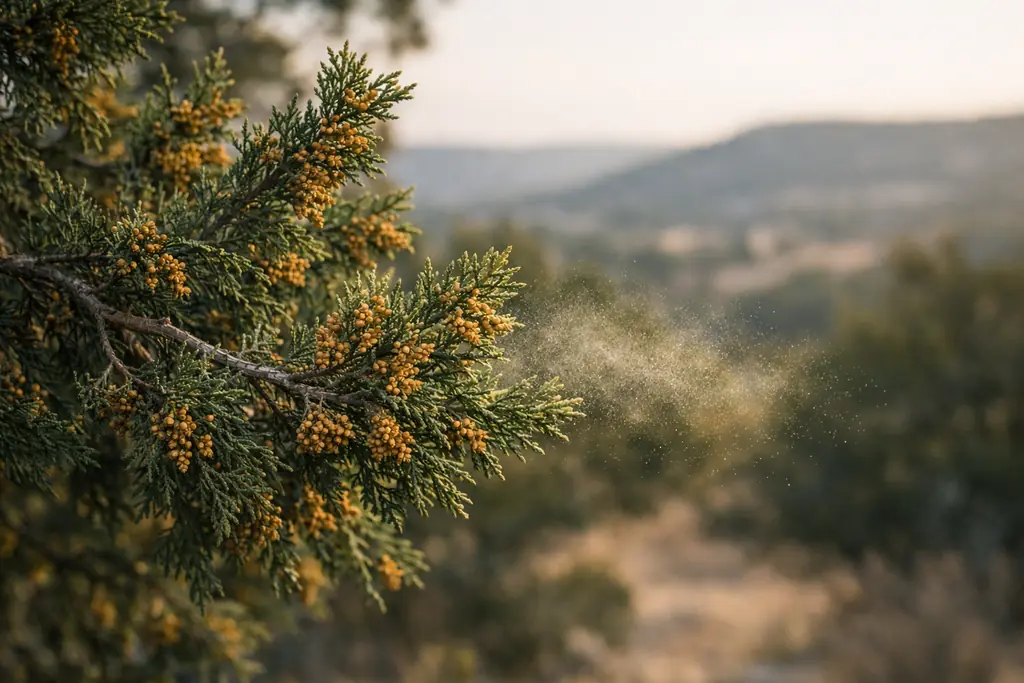
- Winter (December to February)Mountain cedar, a juniper common in Central Texas, releases heavy pollen in the coldest months. Many people call the reaction cedar fever. Elm and other early trees can start late in winter.
- Spring (February to May)Tree pollen, including oak and elm, comes first in the year. According to the ACAAI, tree pollination begins earliest, followed by grasses later in spring.
- Late spring and summerGrass pollen, such as Bermuda grass, takes over as trees finish. Mowing and yard work raise exposure.
- Late summer and fall (August to November)Ragweed and other weeds. The ACAAI notes that ragweed typically produces pollen from August into November.
Sources: American College of Allergy, Asthma and Immunology (ACAAI), Seasonal allergies and Ragweed allergy; American Academy of Allergy, Asthma and Immunology (AAAAI), Allergic rhinitis and National Allergy Bureau pollen counts.
General tips for high pollen days
- Keep windows closed at home and in the car, and use air conditioning on recirculate.
- Shower and change clothes after yard work or time outdoors.
- Start allergy medicine before your usual season begins, as your doctor advises.
- Wear a mask when mowing or working outside on high days.
If symptoms persist despite these steps, see an allergist or ENT. Allergy testing can show which pollens you react to, and treatment such as allergy shots may help. Learn more about allergy care in Granbury and Weatherford or read our guide to cedar fever and ragweed season.
Frequently asked questions
When is cedar fever season in North Texas?
Mountain cedar, a juniper, releases pollen in the coldest months, usually December through February. Many people in Texas call the reaction cedar fever. On this map it appears under trees, listed as juniper.
When does pollen peak around Granbury and Weatherford?
Trees such as oak and elm lead in late winter and spring, grasses follow from late spring into summer, and ragweed and other weeds peak from late summer into fall, according to the ACAAI. Levels often run higher on dry, windy days.
Where does this pollen map get its data?
From the Google Pollen API, which estimates daily tree, grass and weed pollen on the Universal Pollen Index (0 to 5). We refresh the forecast for 16 North Texas towns three times a day. Forecasts are estimates, not measured pollen counts.
What do the numbers on the map mean?
Each town shows its Universal Pollen Index: 0 None, 1 Very low, 2 Low, 3 Moderate, 4 High and 5 Very high. Overall shows the highest of the three pollen types for that day.
When should I see an ENT or allergist for pollen allergies?
If symptoms last for weeks, keep coming back each season, disturb sleep, or do not improve with over-the-counter medicine, see an allergist or ENT. Allergy testing can show which pollens you react to. Texas Sinus and Allergy offers on-site allergy testing.
This forecast is general information, not medical advice. It does not replace an exam or a treatment plan from your doctor.

Feel better, close to home.
Appointments in Granbury Tuesday through Friday, and in Weatherford on Mondays.