Balloon sinuplasty is a minimally invasive procedure that opens blocked sinus passages with a small balloon catheter, without cutting away bone or tissue. It is used for chronic or recurrent sinusitis that hasn't responded to medical treatment, and most people return to normal activities within a few days.
What balloon sinuplasty is
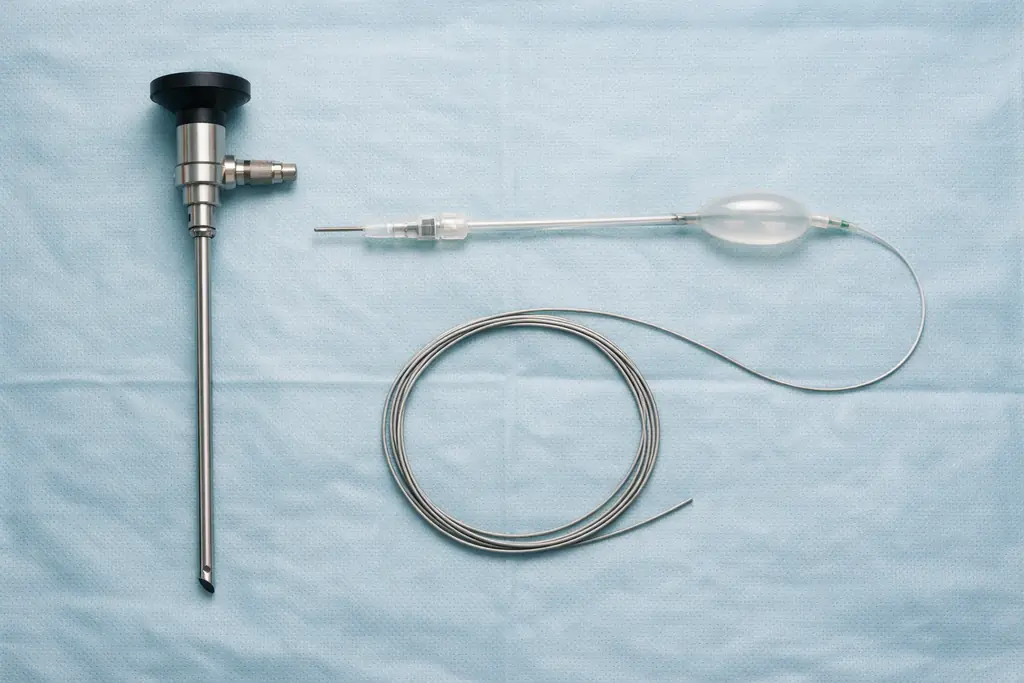
The sinuses drain through narrow openings. When those openings stay swollen or blocked, mucus collects and symptoms keep returning. In balloon sinuplasty, a surgeon guides a thin, flexible balloon catheter into the blocked opening and gently inflates it. The balloon widens the passage by remodeling the surrounding bone and tissue, then it is deflated and removed, leaving the opening wider so the sinus can drain and ventilate again.
The idea of dilating the sinuses with a balloon was first proposed in the early 1990s, and the U.S. Food and Drug Administration cleared a balloon catheter for sinus dilation in 2005. Since then it has become a common alternative or addition to traditional endoscopic sinus surgery. Clinical practice statements from the American Academy of Otolaryngology–Head and Neck Surgery describe balloon dilation as an option for selected adults with chronic or recurrent acute sinusitis.
Who is a good candidate
Balloon sinuplasty isn't the right fit for every sinus problem. It tends to work well for people who:
- Have chronic sinusitis or repeated sinus infectionsConfirmed by symptoms, a nasal endoscopy and a CT scan.
- Have already tried medical treatmentSuch as saline irrigation, steroid sprays, allergy care and antibiotics for infections.
- Have blockage at the sinus openingsParticularly the maxillary, frontal or sphenoid sinuses.
It is usually less suitable when there is extensive nasal polyp disease, significant disease in the ethmoid sinuses, or problems that need tissue removed. In those situations, endoscopic sinus surgery, sometimes combined with balloon dilation, may be recommended. A CT scan is an important part of the decision, because it shows the anatomy of each sinus opening.
Before the procedure
Your ENT will review your history, examine the nose with an endoscope and look at the CT scan with you. Let the office know about all your medications, especially blood thinners, aspirin and supplements that affect bleeding, and follow the instructions you're given about stopping them. You'll also be told whether the procedure will be done in the office with local anesthesia or in an outpatient surgical center, which affects what you can eat and drink beforehand and whether you need a driver.
How the procedure works, step by step
- PreparationThe nose is numbed with local anesthesia, or general anesthesia is used in an outpatient setting.
- AccessA small endoscope is placed in the nose so the surgeon can see the sinus openings.
- PositioningA thin guide wire is passed to the blocked opening, and the balloon catheter slides over it.
- InflationThe balloon is inflated for a few seconds, gently widening the opening.
- RemovalThe balloon is deflated and removed. The sinus may be rinsed to clear mucus.
- CheckThe surgeon confirms the opening is wider, then repeats the process for other sinuses if needed.
Because no bone or tissue is removed, there is usually less bleeding than with traditional sinus surgery, and nasal packing is rarely needed.
Recovery
Most people go home the same day and are back to normal activities within a few days. It is common to have some congestion, mild pressure, light bloody drainage and tiredness for the first day or two. Your instructions will typically include:
- Saline rinsesTo keep the nose clear while it heals.
- Avoiding nose blowing and heavy lifting for a short timeUsually for the first few days, or as directed.
- Over-the-counter pain reliefAs advised by your doctor.
- A follow-up visitTo check healing and clean the nasal passages if needed.
Call the office if you have heavy bleeding, a fever, worsening pain, vision changes or swelling around the eyes.
Benefits
- Minimally invasiveNo incisions, and no bone or tissue removed.
- Less bleedingCompared with traditional endoscopic sinus surgery.
- Faster recoveryTypically less pain and a shorter recovery time.
- Symptom reliefStudies have shown improvement in facial pain, pressure and congestion for many patients with chronic sinusitis.
Risks and limitations
Balloon sinuplasty is considered low risk, but every procedure carries some risk. Possible issues include:
- Infection
- BleedingUsually minor.
- Symptoms that don't improve enoughSome patients need additional treatment or surgery.
- Injury to nearby structuresRare, because the sinuses sit close to the eyes and the base of the skull.
Balloon sinuplasty also doesn't treat the underlying cause of inflammation, such as allergies. Ongoing allergy care, saline rinses and steroid sprays are often still part of the plan afterward.
Balloon sinuplasty vs. endoscopic sinus surgery
Endoscopic sinus surgery removes blocking bone, tissue or polyps through the nose with small instruments. It can treat more extensive disease, including polyps and ethmoid sinus problems. Balloon sinuplasty dilates openings without removing tissue. Some patients have a hybrid approach that uses both. Which approach fits depends on your CT scan, your symptoms and what has already been tried.
Questions to ask before choosing a procedure
Knowing the right questions to ask, when the right time for surgery is, and which non-invasive alternatives to explore first all help you make a confident decision. Consider bringing these to your consultation:
- What does my CT scan show?Ask which sinuses are involved and whether the openings, the tissue inside, or both are the problem.
- Have I tried the medical options that fit my case?Rinses, steroid sprays, allergy treatment and antibiotics for true infections.
- Am I a candidate for balloon dilation, surgery or both?And why one approach is recommended over the other.
- Will it be done in the office or an outpatient center?This affects anesthesia, preparation and whether you need a driver.
- What results are realistic for me?Including which symptoms are likely to improve and which may not.
- What will recovery look like?Time off work, activity limits and follow-up visits.
- What happens if symptoms come back?And what ongoing care, such as allergy treatment, will still be needed.
Writing your symptoms down before the visit, including how long they've lasted and how many infections you've had in the past year, makes the conversation more productive.
Balloon sinuplasty with Dr. Bhaloo
Dr. Salim Bhaloo performs minimally invasive sinus procedures, including balloon sinuplasty, for patients from Granbury, Weatherford and the surrounding area. Every case is different, so the first step is an exam to see whether balloon sinuplasty makes sense for you. Learn more on our balloon sinuplasty page, watch a short video on 10 things to know about balloon sinuplasty, or call 682-936-4081.
Frequently asked questions
Is balloon sinuplasty painful?
Most people feel pressure rather than pain during the procedure, especially with local anesthesia. Soreness afterward is usually mild and short-lived.
How long does balloon sinuplasty take?
It is generally a short procedure, though the time depends on how many sinuses are treated and whether it is done in the office or an outpatient center.
How soon can I go back to work?
Many people return to normal activities within a few days. Your doctor will give you specific instructions based on your procedure.
Does balloon sinuplasty work for nasal polyps?
It is usually not the main treatment for extensive polyps. Polyps often need medication or endoscopic sinus surgery, sometimes combined with balloon dilation.
Is balloon sinuplasty covered by insurance?
Coverage depends on your plan and your medical history. Check with your insurance carrier about your specific benefits.
Questions about your symptoms?
Dr. Bhaloo sees patients in Granbury Tuesday through Friday and in Weatherford on Mondays. One number books both offices.
This article is for general information, not medical advice. Please see a physician for diagnosis and treatment.