In North Texas, allergy season rarely takes a break. Mountain cedar (Ashe juniper) pollen peaks in winter, trees like oak and elm follow in spring, grasses carry through summer, and ragweed takes over in late summer and fall. Knowing which season sets off your symptoms helps you start treatment early and decide whether allergy testing or allergy shots make sense.
Why allergies are so persistent here
Hood and Parker County sit where the Cross Timbers meet the edge of the Texas Hill Country. That mix of juniper, oak and elm woodland, pasture grasses and open land means a long line of plants releasing pollen at different times. Mild winters also mean some plants pollinate when people in colder climates are getting a break. Add indoor allergens like dust mites, pet dander and mold, and many people in Granbury and Weatherford have symptoms for much of the year.
Winter: mountain cedar and cedar fever
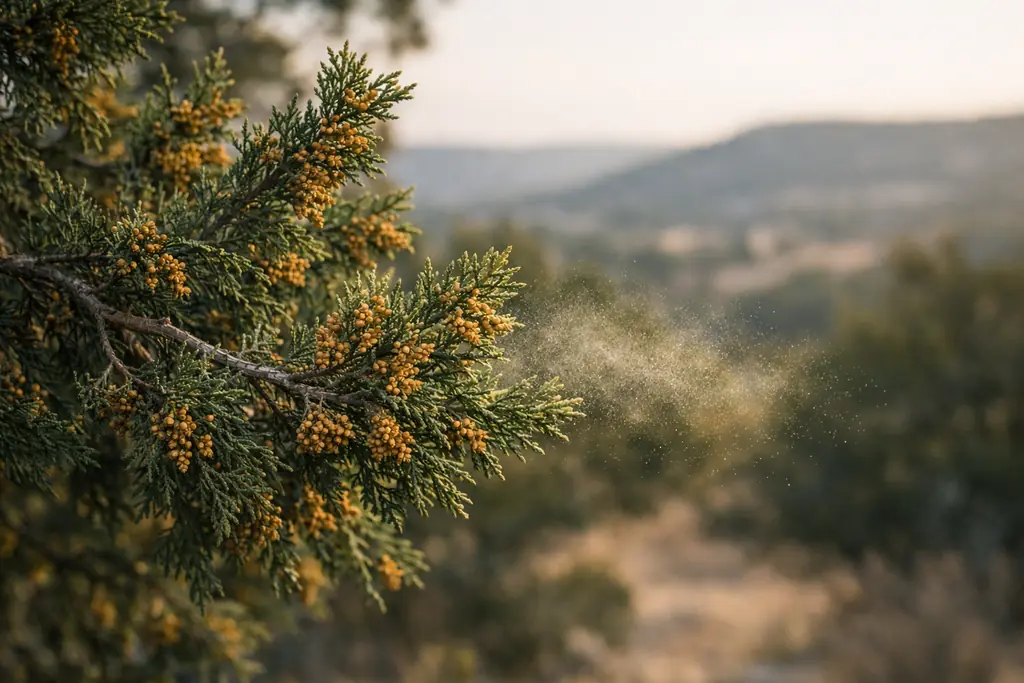
Ashe juniper, known locally as mountain cedar, releases large amounts of pollen from about December through February. On dry, windy days, pollen clouds can be visible drifting off the trees. The strong reaction many people have is nicknamed cedar fever, even though it doesn't usually cause a true fever.
- Common symptomsSneezing, a runny or blocked nose, itchy and watery eyes, an itchy throat, fatigue and sometimes a mild low-grade temperature.
- How it differs from the fluAllergies don't usually cause a high fever or body aches. A temperature over about 101°F is more likely an infection.
- Who gets itSome people who have lived here for years develop cedar allergy later, after repeated exposure.
Spring: oak, elm, pecan and other trees
As cedar fades, tree pollen picks up. Oak is a major spring allergen in North Texas, alongside elm, ash, pecan, hickory and mulberry. The yellow-green dust on cars and patios in March and April is mostly tree pollen. Tree pollen is fine and travels a long way on the wind, so you don't need an oak in your own yard to react.
Late spring and summer: grasses
Grasses, including Bermuda and Johnson grass, pollinate from late spring through summer. Mowing, yard work and time at the lake or ball field can bring on symptoms. Grass pollen counts tend to be higher on warm, dry, breezy afternoons.
Late summer and fall: ragweed and weeds
Ragweed is the main fall allergen across much of the United States, and North Texas is no exception. It typically pollinates from late summer into fall, often until the first freeze. Other weeds, such as pigweed and marsh elder, add to the load, and cedar elm, unlike most trees, pollinates in the fall.
People with ragweed allergy sometimes notice an itchy mouth when eating certain fresh fruits and vegetables, such as melons or bananas. This is called oral allergy syndrome. Mention it to your doctor if it happens.
Year-round: dust mites, pets and mold
- Dust mitesLive in bedding, upholstery and carpets. Symptoms are often worse in the morning.
- Pet danderFrom cats, dogs and other animals, and it stays in a home long after a pet is gone.
- MoldOutdoor mold rises after rain and in damp, warm weather; indoor mold grows in bathrooms, basements and around leaks.
Planning ahead for your season
Allergy medicines tend to work better when started before symptoms are in full swing. If you know cedar season hits you hard, talk with your doctor in the fall about starting a nasal steroid spray or other medicine before December.
- Watch pollen countsLocal forecasts and pollen trackers can help you plan outdoor time.
- Keep windows closed on high-pollen daysUse air conditioning in the car and at home, and change HVAC filters regularly.
- Rinse off pollenShower and change clothes after time outside, and wash bedding weekly.
- Use saline rinsesRinsing the nose clears pollen. Use distilled, sterile or previously boiled water.
- Wear sunglasses outdoorsThey reduce the amount of pollen that reaches your eyes.
When to consider testing or allergy shots
If symptoms last for months, interfere with sleep or work, lead to repeated sinus infections, or don't respond to over-the-counter medicine, allergy testing can pinpoint your triggers. For people with several seasonal and year-round allergies, allergy shots (immunotherapy) can reduce sensitivity over time. Read how allergy testing and allergy shots work.
Allergies are also one of the common contributors to chronic sinusitis. When congestion never fully clears between seasons, it's worth an exam.
Lake days, ranch work and yard work
Life in Hood and Parker County happens outdoors: on Lake Granbury, at the ranch, on the ball field and in the yard. A few adjustments let you keep doing what you enjoy during your worst season.
- Mow and do yard work with a maskA well-fitting N95-style mask reduces how much pollen and mold you breathe in. Ask someone else to mow during your peak season if you can.
- Mind the windPollen counts tend to run higher on warm, dry, windy days. Rain clears the air for a while, though mold can rise afterward.
- Hay and barnsHay and stored feed can carry grass pollen and mold. Wear a mask and change clothes afterward.
- Hunting season overlaps with cedarLate-season hunts in December and January fall right in mountain cedar season. Take your medicine before heading out.
- Keep pollen out of the carClose the windows and set the air conditioning to recirculate on high-pollen days.
- Pets carry pollen tooWipe down dogs after walks, and keep them off the bed in your peak season.
Children often have allergy symptoms that look like a constant cold: a runny nose, sniffing, mouth breathing, dark circles under the eyes, or rubbing the nose upward. If that pattern repeats each season, it is worth an evaluation.
More to know
Pollen calendars shift from year to year with rainfall and temperature, so the dates above are typical rather than exact. A wet fall can mean a heavy cedar season, and a warm spring can start tree pollen early. Watching local counts each season is a reliable guide.
Allergy care in Hood and Parker County
Texas Sinus and Allergy offers on-site allergy testing and allergy shots for patients around Granbury, Weatherford, Glen Rose and the Fort Worth area. Dr. Salim Bhaloo is a Fellow of the American Academy of Otolaryngic Allergy. Learn more on our allergies page, or call 682-936-4081 to book at the Granbury or Weatherford office.
Frequently asked questions
When is cedar fever season in North Texas?
Mountain cedar (Ashe juniper) usually pollinates from about December through February, with peaks on dry, windy days.
Does cedar fever cause a real fever?
Usually not. It can make you feel tired and run down, and occasionally causes a slight rise in temperature, but a high fever is more likely an infection such as the flu.
Why do I have allergies in the fall?
Ragweed is the main fall allergen, typically pollinating from late summer until the first freeze. Other weeds, cedar elm and outdoor mold can add to fall symptoms.
Can you develop allergies as an adult after moving to Texas?
Yes. Allergies can develop after a few seasons of exposure to new plants, which is why some people notice symptoms a year or more after moving to the area.
Should I start allergy medicine before the season?
Many people do better starting medicine like a nasal steroid spray before their season begins. Ask your doctor what timing fits your symptoms.
Questions about your symptoms?
Dr. Bhaloo sees patients in Granbury Tuesday through Friday and in Weatherford on Mondays. One number books both offices.
This article is for general information, not medical advice. Please see a physician for diagnosis and treatment.