Balloon sinuplasty in Granbury & Weatherford
A minimally invasive way to open blocked sinuses. No bone or tissue is removed, and recovery is faster than traditional sinus surgery.
Overview
Balloon sinuplasty uses a small balloon catheter to widen blocked sinus openings so they can drain and ventilate again. The idea was proposed in the early 1990s, and the FDA approved a balloon catheter for sinus dilation in 2005.
It can be done in the office or at an outpatient surgery center, under local or general anesthesia.
How it works
- PreparationLocal or general anesthesia, plus antibiotics to reduce the risk of infection.
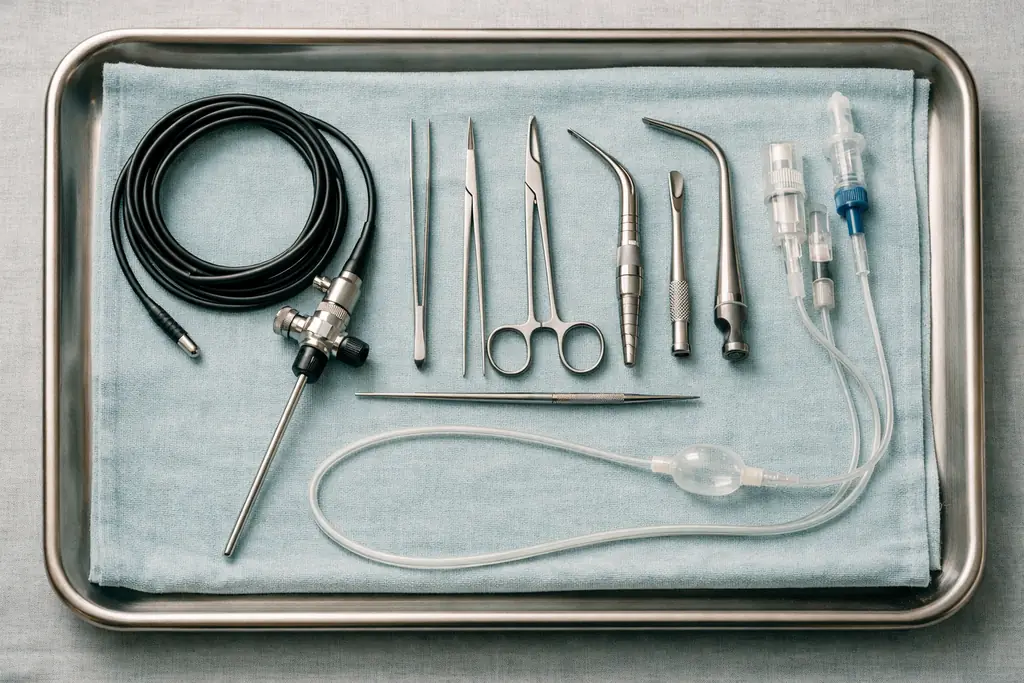
- AccessA small endoscope shows the sinuses, and a guide wire is placed in the blocked opening.
- PositioningThe balloon catheter slides over the guide wire into the opening.
- InflationThe balloon is inflated, gently widening the opening.
- RemovalAfter a few seconds it is deflated and removed.
- CheckThe opening is checked, and the steps can be repeated on other sinuses.
Benefits
- Minimally invasiveNo removal of bone or tissue from the sinuses.
- Less bleedingCompared with traditional endoscopic sinus surgery.
- Faster recoveryTypically less pain and a shorter recovery.
- ReliefReduced facial pain, pressure and congestion for people with chronic sinusitis.
Risks
- InfectionAs with any procedure; antibiotics are given before and after.
- BleedingLess than traditional surgery, but still possible.
- Incomplete reliefIt doesn't work for everyone, and some patients need further treatment.
- Tissue damageRarely, the catheter can damage surrounding tissue.
Who it's for
Usually patients with chronic sinusitis that hasn't responded to medication or nasal irrigation, or with recurring sinus infections or related problems such as nasal polyps. Candidates should be in good overall health.
Recovery and results
Most patients are back to normal activities within a few days. You may be asked to avoid strenuous exercise and blowing your nose while the passages heal, and you may be prescribed medication for pain or to prevent infection.
Results depend on how severe the condition is, but studies show most patients have significant improvement in symptoms and quality of life.
Watch: Balloon sinuplasty, 10 things you need to know (YouTube)
Take the SNOT-22 sinus symptom test
Related articles
This page is general information, not medical advice. Please see a physician for diagnosis and treatment.
Keep reading.

Feel better, close to home.
Appointments in Granbury Tuesday through Friday, and in Weatherford on Mondays.