Hearing loss usually comes on so gradually that family members notice before you do. Common early signs are asking people to repeat themselves, trouble following conversation in noisy places and turning the TV up louder than others like. If you notice these changes, a hearing test is quick and painless, and sudden hearing loss in one ear should be checked right away.
How common hearing loss is
According to the National Institute on Deafness and Other Communication Disorders (NIDCD), about 15% of American adults report some trouble hearing, and hearing loss becomes more common with age. It is one of the most common chronic conditions in older adults, yet many people wait years before getting their hearing checked.
Early signs to watch for
- Asking people to repeat themselvesEspecially when you can't see their face.
- Trouble hearing in restaurants and groupsBackground noise makes speech hard to separate.
- Thinking others are mumblingSpeech sounds muffled or unclear rather than too quiet.
- Turning up the TV or phone volumeOthers in the room find it too loud.
- Missing high-pitched soundsSuch as children's voices, birdsong, the microwave beep or the turn signal.
- Ringing or buzzing in the earsTinnitus often comes with hearing loss.
- Feeling tired after conversationsListening takes more effort when hearing is reduced.
Types of hearing loss
- ConductiveSound is blocked in the outer or middle ear, for example by earwax, fluid behind the eardrum, a perforated eardrum or a problem with the small middle ear bones. It is often treatable with medication or surgery.
- SensorineuralDamage to the inner ear or the hearing nerve, most often from aging, noise exposure or genetics. It is usually permanent and managed with hearing aids or other devices.
- MixedA combination of conductive and sensorineural loss.
Our hearing loss guide explains the causes and treatments for each type.
Common causes
- Age-related hearing loss (presbycusis)Gradual, affecting both ears, usually high pitches first.
- Noise exposureFirearms, power tools, machinery, motorcycles and loud music can damage the inner ear's hair cells. Hunting and shooting without hearing protection is a common cause in rural Texas.
- Earwax or ear infectionsOften reversible.
- Some medicationsCertain antibiotics and chemotherapy drugs can affect hearing.
- Medical conditionsIncluding Ménière's disease and, rarely, a benign tumor on the hearing nerve.
What a hearing test involves
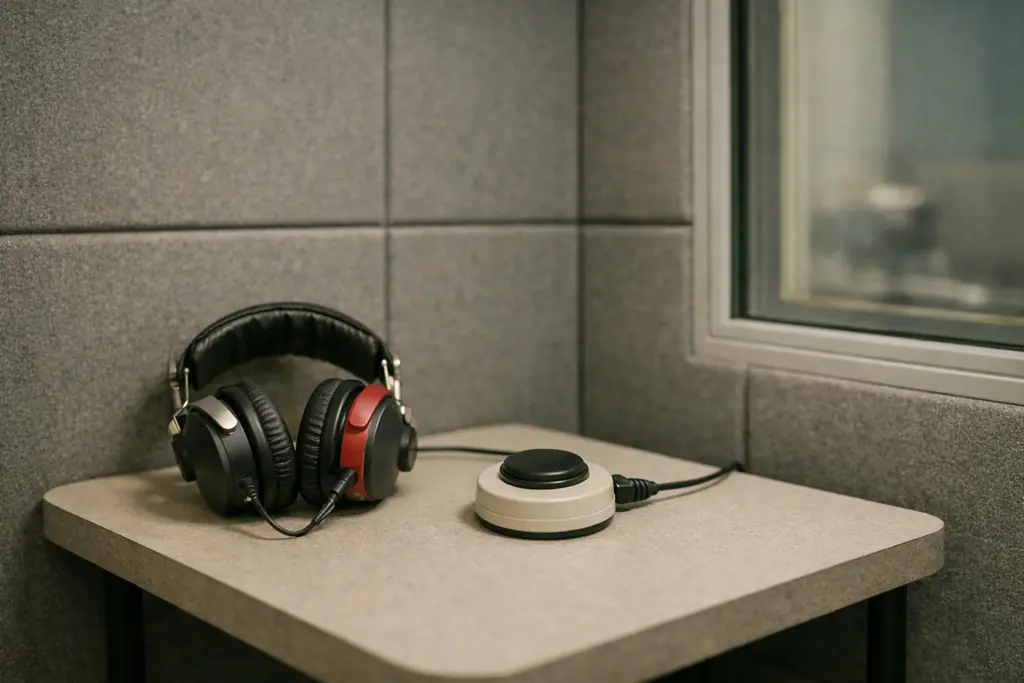
A full hearing evaluation is painless and usually takes place in a sound-treated booth. It commonly includes:
- Pure-tone testingYou listen through headphones and respond each time you hear a tone, which measures the softest sounds you can hear at different pitches.
- Speech testingYou repeat words at different volumes, which shows how clearly you understand speech.
- TympanometryA small probe in the ear checks how the eardrum moves, which helps detect fluid or middle ear problems.
Results are shown on an audiogram, a chart of your hearing at each pitch. Together with an ear exam, it shows the type and degree of hearing loss and guides the next step.
Sudden hearing loss is an emergency
Sudden sensorineural hearing loss, a rapid drop in hearing, usually in one ear, over a few hours to a few days, needs prompt attention. The NIDCD advises treating it as a medical emergency, because treatment, often with steroids, is more likely to help when started early. Many people mistake it for earwax or congestion. If you suddenly can't hear well in one ear, call a doctor that day.
When to get your hearing checked
- Any time you notice the signs above
- If family or friends mention itThey often notice first.
- If you have ringing in the earsEspecially in one ear.
- If you work around loud noise or shoot regularly
- As a baseline in middle ageSo future changes can be compared.
Why treating hearing loss matters
Untreated hearing loss can make conversation tiring, lead people to withdraw from social activities and affect safety at home and on the road. Research has also linked hearing loss with faster cognitive decline in older adults. Read more in hearing loss and dementia risk.
Protecting the hearing you have
Noise-induced hearing loss is permanent, but it is also preventable. The National Institute for Occupational Safety and Health (NIOSH) recommends limiting exposure to noise at 85 decibels to eight hours a day, and the safe time drops quickly as sound gets louder. Gunfire is far louder than that and can damage hearing with a single shot.
- Use protection every time you shootFoam earplugs, earmuffs, or both together for firearms.
- Protect your ears around engines and toolsMowers, chainsaws, leaf blowers, motorcycles and shop tools all add up.
- Turn down personal audioIf someone nearby can hear your earbuds, they're probably too loud.
- Give your ears a restQuiet time after a loud event helps, and ringing that lasts after noise is a warning sign.
Earwax: what to do and what not to do
Earwax is normal and protects the ear canal. It usually moves out on its own. The American Academy of Otolaryngology–Head and Neck Surgery advises against putting cotton swabs or other objects in the ear canal, which can push wax deeper or injure the eardrum, and against ear candling, which hasn't been shown to work and can cause burns.
If wax builds up and muffles your hearing, causes fullness or makes it hard to see the eardrum, a doctor can remove it safely. Don't try to remove wax if you've had a hole in your eardrum or ear surgery unless your doctor says it's safe.
More to know
If you're not sure whether your hearing has changed, try noticing a few everyday situations for a week: phone calls, conversations in the car, church or meetings, and the TV volume compared with others in the room. Writing down where you struggle gives your doctor useful detail and makes the test results easier to put into context. Bringing a family member to the appointment can help too, since they often notice things you don't.
Hearing tests in Granbury and Weatherford
Texas Sinus and Allergy offers on-site hearing testing and vestibular (balance) testing, so the evaluation and the ENT exam can happen in one place. If hearing aids are the right next step, our sister practice, Clear Choice Hearing Center, fits and services them. Call 682-936-4081 to schedule at the Granbury office or the Weatherford office.
Frequently asked questions
How long does a hearing test take?
A standard hearing evaluation usually takes well under an hour, including the ear exam and testing in a sound booth.
Does a hearing test hurt?
No. You listen to tones and words through headphones and respond. Tympanometry involves a small probe that briefly changes pressure in the ear canal.
Can hearing loss be reversed?
Some types can. Earwax, fluid and some middle ear problems are often treatable. Most age-related and noise-related hearing loss is permanent, but hearing aids and other devices can help a great deal.
What should I do if I lose hearing suddenly in one ear?
Call a doctor or ENT office the same day. Sudden sensorineural hearing loss is treated as an emergency because early treatment improves the chance of recovery.
Where can I get hearing aids?
Hearing aids are fitted at our sister practice, Clear Choice Hearing Center. Hearing testing is done on site at Texas Sinus and Allergy.
Questions about your symptoms?
Dr. Bhaloo sees patients in Granbury Tuesday through Friday and in Weatherford on Mondays. One number books both offices.
This article is for general information, not medical advice. Please see a physician for diagnosis and treatment.